
The Boom in Apartment Approvals is a Great Opportunity for Architects to Lead the Discussion on Urban Housing
By Chris Johnson AO | Former NSW Government Architect and the former chief executive of Urban Taskforce,The Fifth Estate
"Sydney's apartment boom presents an unprecedented opportunity for architects to lead the urban housing discussion. As apartment living becomes the new norm, the architectural profession must champion quality design that demonstrates density done well".
The housing crisis in Australian cities is leading to a major change towards a more urban lifestyle. Over my career, I have championed urban living through well-designed apartments with density and height. But i don't see the architectural profession taking the lead in the public debate. In this article, I look at the extensive coverage that house design gets on television programs and architectural awards and I propose a series of initiatives for architects to boost the public's perception of apartment living.
THE HOUSING CRISIS IS LEADING TO MORE APARTMENTS
With the national, state, and territory governments focused on the current housing crisis, there is a big swing to supporting greater height and density, particularly around rail stations.
TOD or Transit Oriented Development has become the call to arms in Greater Sydney as NSW Premier, Chris Minns, sets up a fast-track approval process for new housing through three senior bureaucrats with 30% extra heights and 15% of units being affordable. And this means apartments.
WE NEED MORE PROMOTION OF QUALITY APARTMENT DESIGN
Suddenly, governments are applauding apartment towers that supply hundreds of new homes in one approval. Yet the public image of the architectural profession in Australia is largely about individually well-designed houses on beautiful sites. Look at the multiple television programs focusing on Grand Designs or House Renovations with architect presenters. Only 5 percent of Australia’s houses are designed by architects. But the surge in apartment buildings is a great opportunity to applaud this growing housing type and to inform the viewing public of the pluses of this approach to urban living.
WE NEED MORE PROMOTION OF QUALITY APARTMENT DESIGN
Even the Australian Institute of Architects (AIA) award system is skewed towards the detached house, with categories for Residential Houses (New), Residential Houses (alterations and additions), along with categories for educational, heritage, interiors, small projects, urban design, and special awards. Of the 15 categories, only one is for Residential (multiple housing), and this includes townhouses, terrace houses, mid-rise apartments, and high-rise apartments.
In the 2025 NSW awards, five tall apartment buildings received awards in this category. These include Indi by Bates Smart and Renzo Piano’s soaring residential towers at Barangaroo. To acknowledge the growing trend to apartment living, the AIA award category of multiple housing should be split into low rise, medium rise, and high rise. This would encourage more nominations, leading to more promotion of the work architects do in this area. There is a great opportunity for architects to be seen as the shapers of Australian cities through quality design of apartment buildings. And the one off boutique detached house award winners will still be covered by media.
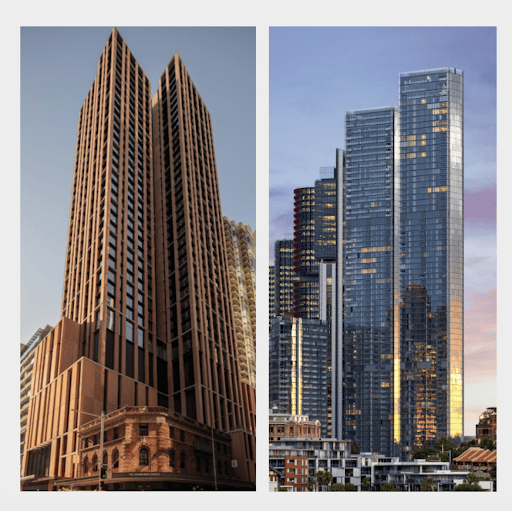
“The Indi apartment tower by Bates Smart and the One Sydney Harbour apartment tower by Renzo Piano both won Urban Taskforce and AIA awards.”
INNER WEST COUNCIL LEADING WITH CITY ARCHITECT
One current example of a local council linking the swing to apartments with architects is Inner West Council in Sydney. The council has set up a three-person fast-track team of senior staff to help with the production of new denser housing. But the council has added their soon-to-be-appointed City Architect.
Council wants their community to know that fast approvals will also be well-designed buildings. All Metropolitan Sydney Councils should have a City Architect, as communities that are concerned about what they see as a very different way of living will be assured of design excellence.
BOB CARR AS NSW PREMIER SAW THE NEED FOR BETTER DESIGN OF APARTMENTS TWO DECADES AGO
When I was NSW Government Architect I was summoned to NSW Premier Bob Carr’s electoral office on Anzac Parade. Bob did not have a driving license, and as he was driven home along Anzac Parade he observed what he believed were badly designed apartment buildings. Bob saw that Residential Flats (as they were called then) were becoming more common and likely to become dominant in Sydney.
He demanded new planning rules that only allowed qualified architects to design new apartment buildings above 3 floors and a series of documents to promote design quality. I was tasked with producing a Patten Book of quality guides, and we ran workshops around this. A Residential Flat Design Guide was also prepared, which became the Apartment Design Guide (ADG), which still exists today. Although the ADG has become too long and complex, and now needs simplification.
No other state in Australia has required only architects to design this growing housing typology, and this gives architects in NSW an amazing potential to demonstrate to doubting communities that a more urban lifestyle can be a very positive outcome. Pressure should be applied to other states and territories to require the expertise of architects to design apartment buildings.
WESTERN AUSTRALIAN PLANNING MINISTER SUPPORTS APARTMENT GROWTH
WE NEED MORE PROMOTION OF QUALITY APARTMENT DESIGN
NEW ZEALAND MINISTER FOR HOUSING SUPPORTS DENSITY AND HEIGHT
The Centre for Independent Studies also had a recent discussion between the New Zealand Minister for Housing, Chris Bishop, along with NSW Premier Chris Minns. Premier Minns started proceedings by saying that Sydney was the second most unaffordable city in the world after Hong Kong.
But he went on to say that Sydney ranked at 800th on the scale for city density. There was a link, he explained, and outlined his policies to support the more affordable apartment living through planning incentives.
Minister Bishop agreed fully with Premier Minns and explained New Zealand’s planning support for greater density and height around transport nodes. He called for councils to get out of the way of market-based developers of new housing.
WE NOW HAVE ACTIVE SUPPORT FOR APARTMENTS FROM THE NSW PREMIER CHRIS MINNS
The change of character to Sydney’s suburbs through apartment proposals led to the rise of NIMBY groups rejecting any change to their local character. There was even a group called Save Our Suburbs (SOS). But in recent years, the mood has shifted from Not in My Back Yard (NIMBY) to YES in My Backyard (YIMBY).
Even newspapers like the Sydney Morning Herald have become much more supportive of the change of character coming to Sydney. Much of the argument has become one of intergenerational equity, which supports younger generations being able to afford a home. The NSW Premier, Chris Minns, and his Planning Minister, Paul Scully, have been particularly strong in driving the swing to apartment construction in Sydney.
The Transit Oriented Development program allows 30% extra height if 15% of apartments are affordable for 15 years.
Another new group is Australian Apartment Advocacy who are running Apartment Leaders Forums, which includes developers, planners, and architects involved in delivering apartment buildings. This forum is undertaking discussion in venues across Sydney, including in architects’ offices.
ALL THE SIGNALS POINT TO A BOOM IN APARTMENT BUILDINGS AND THIS IS A GREAT OPPORTUNITY FOR ARCHITECTS TO TAKE A LEADERSHIP ROLE
The current housing crisis in Australia has been fueled by a growing disconnect between average incomes and average housing prices. The Domain organization measures average housing costs, and in Sydney, they say this has reached $1,600,000 for a detached house. But they also say the average apartment cost is now $800,000.
This is half the cost of a house, and most apartments are located closer to amenities and jobs which reduces travel costs. Younger generations are now preferring a more urban lifestyle at half the price of a house. At another level, the NSW Productivity Commissioner has stated that each new detached house built on Sydney’s fringe adds $75,000 more than housing on an urban infill site for infrastructure costs. These numbers are why the NSW Government is so strong on driving a planning change towards a more urban layer for Sydney.
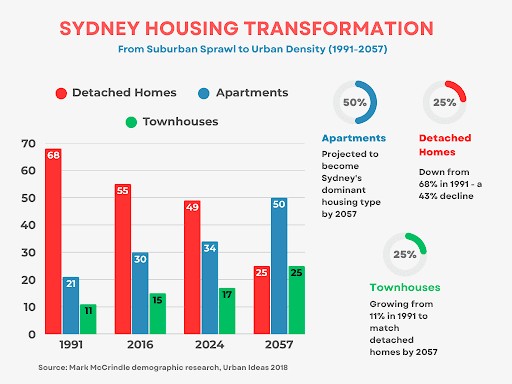
Way back in 2018, I produced a magazine called Urban Ideas, and I had an issue based on research by demographer Mark Mccrindle on the trends towards apartment living in Sydney. Mark found that in 1991, only 21% of homes were apartments, but this rose to 30% in 2016. Mark predicted that by 2024, apartments would be 34% and would be 50% by 2057, with 25% townhouses and only25% as detached houses
WE HAVE HAD ARCHITECTURAL LEADERSHIP IN URBAN LIVING IN THE PAST
The most famous architect who had a vision for high-rise apartment living was Le Corbusier, with his Unite d’ Habitation, with numerous examples built in France at Marseille and Firminy. Corb’s design had corridors on each third floor, which gave full-width apartments with double-height space for living areas. He saw the 18-floor buildings as “vertical garden cities” with many shared facilities on the roof.
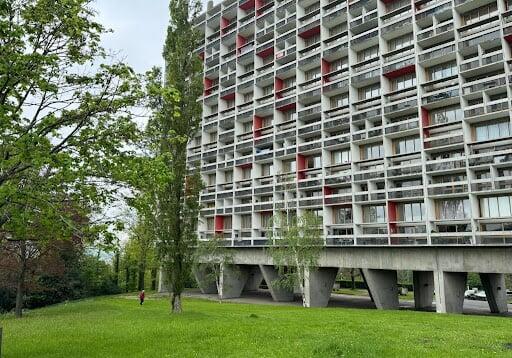
"Le Corbusier's Unité d'Habitation pioneered the concept of 'vertical garden cities' - demonstrating how architects can lead visionary thinking about high-density living."
In Australia, Harry Seidler brought the spirit of modernism into housing with his design of Blues Point Tower, with elevations reflecting modernist artists like Joseph Albers. The tower was the first in Australia to use strata titles which are now the basis for all apartments in the country.
This year’s 2025 Venice Biennale featured the importance of the global housing crisis. The Austrian pavilion had a fascinating comparison of housing policies in Vienna and Rome, organised by the Agency for Better Living. Vienna, with its policy of treating housing as a public good, won out against the less structured policies in Rome. The Australian Pavilion bypassed the urban housing discussion with a First Nation exhibition with a strong sense of place.
THE ARCHITECTURAL PROFESSION SHOULD SEIZE THE OPPORTUNITY OF THE NATIONAL SWING TO URBAN LIVING IN APARTMENTS TO DEMONSTRATE DENSITY DONE WELL
Australian cities, particularly Sydney, are on the cusp of a change from the traditional dominance of the detached house as the majority housing type to the apartment taking over as where most Sydneysiders will live. This is an incredible opportunity for architects to lead in the change process. My concern, however, is that the public image of the architect is still dominated by beautifully designed houses. Here are 6 initiatives that could help advance the standing of architects as apartment designers.
The profession needs to champion the shift to apartment buildings as an opportunity for creative design for future generations. New categories in the architecture awards should acknowledge Low Rise density, Mid Rise, and High Rise multi-unit housing.
The popular media needs to display the exciting examples of apartment living from the Nightingale Housing by Breathe Architecture to WOHA’s Kampung Admiralty in Singapore, designed as a vertical village, along with more Australian examples. A new television program on INNOVATIVE APARTMENTS should be implemented.
Local and State governments need to promote the pluses of apartment living through planning policy and advocacy. An Agency for Better Urban Living needs to be established in the NSW Government.
Architecture courses and Planning courses in Universities need to promote the advantages of urban living in apartments with reference to how other global cities do this.
The YIMBY movement also needs to champion the move to a more affordable urban living model based on apartments.
CPD courses for architects and planners, particularly those by InHouseGroup3, need to champion apartment living and give architects material for the promotion of apartment living.
" Originally published on LinkedIn"